Word Trip - Word Puzzle Game
- 4.9
- Rating
- 10.00M
- Installs
- Free
- Price
 Analysis by App-foxy
I keep coming back to Word Trip for one simple reason: its central word-building loop makes a short break feel purposeful without demanding the concentration of a full crossword. I choose letters, form words, and work through puzzles at a comfortable pace. That sounds straightforward, but the real appeal is how easily the game turns spare minutes into a small mental reset.
Developed by PlaySimple Games, this free word game is aimed at players who enjoy solving rather than competing at high speed. It is rated for Everyone, runs on devices using Android 8.0 or later, and has reached over 10 million installs. The current version is 1.744.0, while its average score sits at 4.9 from around 554 thousand ratings. Those figures suggest a broad audience, but they do not automatically make it right for every word-game fan. The details of its pacing and progression matter more than popularity.
Why the word-building capability matters
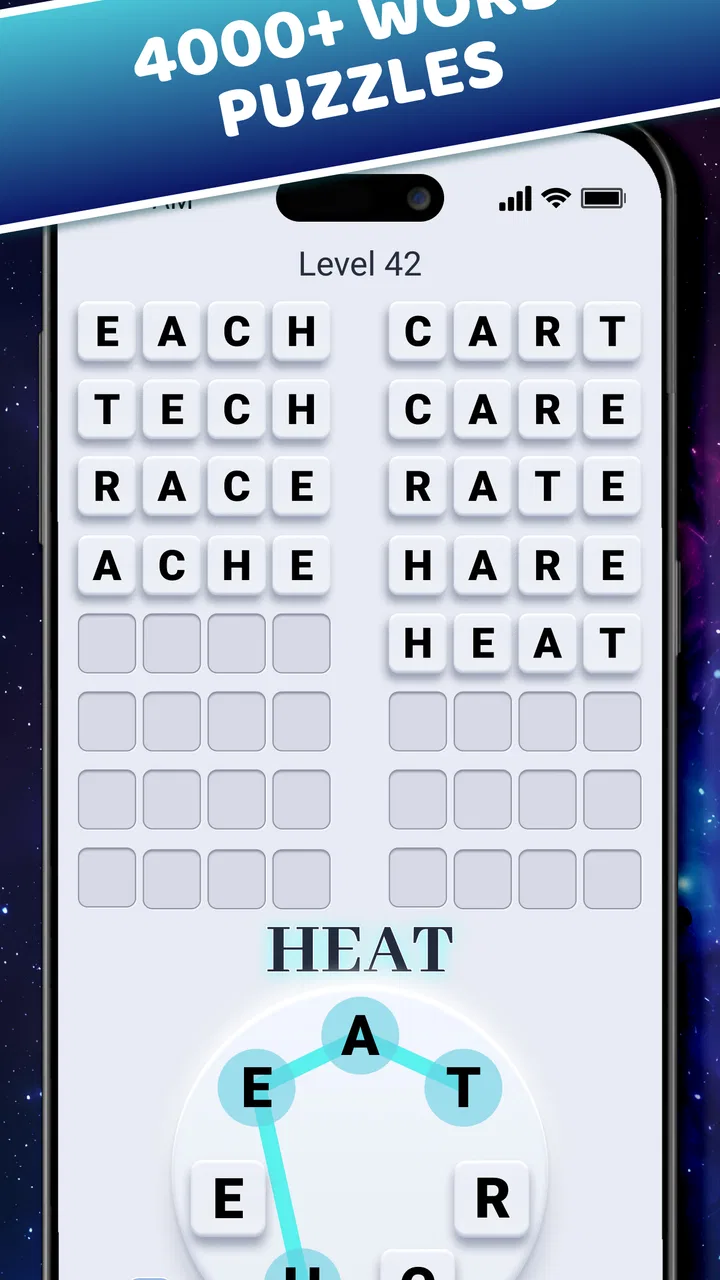
The defining capability is the way a small group of letters becomes the whole puzzle. I am not filling a large grid from a clue list or racing another player. Instead, I test combinations, spot familiar endings, and look for the words the level expects. The effect is pleasantly focused: I can play casually, yet the game still rewards careful observation.
You May Also Like

 Blood Strike: 2.5 Anniversary
Blood Strike’s Loadouts Turn Every Drop Into a Tactical Gamble
A close look at Blood Strike’s custom loadouts: how fast access to signature weapons reshapes its battle royale rhythm, rewards preparation, and narrows the gap between fights.

 Pandora - Music & Podcasts
Pandora’s Music Is Easy to Start, but Harder to Recover
Pandora’s strength is its low-effort path from a seed to a station. Its weak spot is how much confidence it asks you to place in connection, setup, and quiet recovery.

 8 Ball Pool
 Is Built on Rivalries, Rematches, and Routine
A close look at the rivalries, rematches, shared routines, and unanswered safety questions that turn a quick pool match into a persistent mobile community.

 Samsung Music
’s Quiet Strength Is Playing What You Already Own
Its reach comes less from spectacle than from dependable access to a personal library. That simplicity is both the app’s strongest retention engine and its ceiling.

 AccuWeather: Weather Radar
AccuWeather Review: A Quick, Clear Forecast for Everyday Decisions
For everyday plans, the best forecast is the one you can understand quickly. AccuWeather makes rain timing, radar, and local conditions easy to act on, with a few trade-offs.

 Hill Climb Racing
Why Hill Climb Racing Still Turns Crashes Into One More Run
A tiny car, a bumpy hill and one more upgrade: Hill Climb Racing keeps resurfacing because its simple chaos makes every near-miss feel personal.
More From Our News Desk



This format works especially well when I want a game that does not punish interruptions. If I stop halfway through a session, I do not feel as though I have abandoned a complicated strategy. When I return, the task is still clear: examine the available letters and find another valid word. That makes it a natural companion for a commute, a waiting room, or a quiet few minutes before bed.
There is also a useful difference between recognizing a word and actively constructing one. In a traditional crossword, the clue often tells me the direction. Here, I have to generate possibilities from the letters in front of me. That encourages a more exploratory habit. I begin with obvious short words, then rearrange the same letters mentally to uncover less immediate combinations.
The strongest part of the design is not difficulty alone; it is the gentle pressure to look at familiar letters differently. A level can feel easy at first, then slow me down because I am relying on the same patterns. The game becomes more interesting when I stop guessing randomly and start checking prefixes, suffixes, repeated letters, and unusual arrangements.
How a normal session feels
I usually begin by scanning the letters without entering anything. That first pause is worthwhile because it prevents me from spending my attention on the first word that comes to mind. I then enter the most obvious options and use the remaining spaces as clues. If a longer word is missing, the shorter words I have already found often reveal which letters or combinations deserve another look.
This creates a small feedback loop. Each answer narrows the possibilities, but it can also expose a blind spot in my vocabulary. I may know a word perfectly well and still fail to see it when the letters are presented in a different order. That is where the game feels more like a mental exercise than a simple test of recall.
The experience is best when I treat a difficult puzzle as a search problem instead of a failure. I try grouping letters by likely beginnings, then consider common endings. If that does not work, I temporarily ignore the longer answer and look for short, certain words. This workflow is more reliable than tapping every possible combination, and it keeps the game from becoming frustrating too quickly.
Hints can be tempting when I am stuck, but I find them more useful when used selectively. Spending help immediately removes the satisfying part of the puzzle. Waiting a little longer often lets me solve the level myself, while a hint is most valuable when I have genuinely exhausted the patterns I can see. Players who want a completely uninterrupted brain teaser may dislike this pressure, particularly if they prefer solving without any assistance or purchase prompts.
The everyday situation where it fits best
The best scenario for me is a fragmented day. Imagine waiting for an appointment with only a few minutes available. A long story game would be awkward, and a competitive multiplayer match might end before the interruption arrives. This word puzzle is easier to pick up and put down. I can complete a small portion, answer a few words, and stop without losing the thread of a narrative.
It also works well during a low-energy evening when I want something more active than scrolling but less demanding than a serious puzzle book. The familiar letter format gives me an immediate entry point. I do not need to learn a complicated control scheme, memorize a fictional world, or plan several moves ahead.
For language learners, the game can be useful as a light vocabulary prompt, but I would not treat it as a structured language course. Recognizing an answer is not the same as learning its meaning, pronunciation, or usage. Someone studying a new language would gain more from a dedicated vocabulary app with definitions and examples. This game is better for exercising word recognition and flexible thinking in the language I already use.
It can also suit families because the age rating is Everyone and the basic activity is easy to understand. Still, younger players may encounter words that are unfamiliar without receiving the context needed to learn them. I would play alongside a child and discuss unusual answers rather than assume the game itself teaches every word it presents.
What the game does better than familiar alternatives
Compared with a crossword, this format has a lower entry barrier. I do not need to understand a clue’s wording or have specialist knowledge about history, geography, or culture. The letters themselves provide the raw material. That makes the game more approachable when I want a pure word-forming challenge rather than a knowledge quiz.
Compared with a word search, it asks for more active construction. A word-search puzzle rewards visual scanning across a fixed arrangement, while this game makes me generate and rearrange possibilities. I find that more mentally engaging, although players who enjoy the calm certainty of spotting hidden words may prefer the alternative.
Compared with a spelling game designed for children, it feels less instructional and more like a casual puzzle journey. There is usually a stronger sense of personal progress in solving one level after another, but less explanation when a word is unfamiliar. That trade-off is important: I play for the act of solving, not for a lesson after every answer.
It is also less demanding than a daily word challenge that gives everyone one tightly defined puzzle. A daily format can create a satisfying routine, but it may leave me with nothing to do after one attempt. Here, I can continue when I have more time. The downside is that the open-ended supply can make the experience feel more like a habit-forming mobile game than a single thoughtful ritual.
The tradeoffs behind the relaxing pace
The relaxed structure is a strength, but it also means the game may not satisfy players looking for deep strategic variety. The main challenge remains word discovery. If I prefer layered rules, resource management, or a changing board that demands long-term planning, this will probably feel too simple.
Because the game is free, in-app purchases range from $0.49 to $54.99 per item. I can start without paying, which is useful for testing whether the letter puzzles suit me. However, anyone sensitive to monetization should decide in advance how they will handle optional spending. I prefer to regard hints and related extras as a last resort, because buying my way past a puzzle weakens the very mental workout that brought me to the game.
Another limitation is that a word puzzle can expose gaps in vocabulary without explaining them. When I fail to recognize an answer, I may feel that the game is testing familiarity rather than reasoning. That is not necessarily unfair, but it changes the experience. Players who want every solution defined and taught should look for a more educational alternative alongside this one.
The game’s broad appeal can also be a drawback for specialists. Experienced crossword solvers may find the early stages too gentle, while people who enjoy obscure words may want more control over difficulty or a larger emphasis on rare vocabulary. I would not choose it as my only word game if I wanted a serious, high-level challenge every day.
Small techniques that improve the experience
My first practical tip is to avoid entering words in a purely random order. I look for the shortest obvious answer, then use the remaining letters to test common endings. This reduces the number of combinations I consider and often reveals a longer word that initially looked hidden.
My second tip is to use the puzzle’s incomplete spaces as information. A missing word is not just an empty target; its length tells me how ambitious my next search should be. If I am looking for a long answer, I mentally divide the letters into likely chunks instead of trying to imagine the entire word at once.
Third, I save hints for moments when I have changed approaches and still made no progress. A hint is more valuable after I have checked short words, longer words, and alternate arrangements. Used this way, it can restart my thinking rather than replace it. This is particularly helpful during a short break, when I want to avoid turning one stubborn puzzle into a lengthy source of irritation.
Finally, I play in focused bursts rather than leaving the game open indefinitely. The puzzles are easy to continue, and that convenience can encourage automatic tapping. A short session keeps the activity feeling like a deliberate break. If I notice that I am entering guesses without considering them, I stop and return later.
Who will gain the most from it
Word Trip is a strong fit for someone who wants a free, approachable word game with a forgiving rhythm. It suits casual players, commuters, people who enjoy vocabulary-based puzzles, and anyone looking for a screen activity that can be interrupted without consequences. The large audience and 4.9 average rating from roughly 554 thousand ratings reflect its accessibility, although personal taste still matters more than the score.
I would recommend it to a friend who likes word searches but wants more active thinking, or to a crossword fan who sometimes wants a lighter alternative. It is also a reasonable choice for someone who wants to build a small daily puzzle habit without committing to a long session.
I would steer a few people elsewhere. If you need definitions, pronunciation, and structured lessons, choose a language-learning tool. If you want competitive matches, choose a multiplayer word game. If you expect demanding cryptic clues or advanced vocabulary from the first session, a serious crossword platform may be more rewarding. And if optional purchases make free-to-play games uncomfortable, inspect the spending experience carefully before settling in.
My final view after using the word loop
What stays with me is the simple act of turning a limited set of letters into a sequence of discoveries. The game does not need complicated mechanics to make that satisfying. Its best quality is the way it fills small gaps in the day while still asking me to pay attention.
It is not a complete vocabulary tutor, a competitive arena, or a demanding puzzle laboratory. It is a polished casual word game from PlaySimple Games that understands the value of a clear objective and a flexible pace. Since it is free and suitable for Everyone, I think it is worth trying if you want a gentle mental break. I would keep my expectations focused on relaxed word solving, use hints thoughtfully, and decide for myself whether its progression remains engaging after the novelty fades.
FAQs for Word Trip - Word Puzzle Game
01What is Word Trip and how does it work?
Word Trip is an engaging word puzzle game where players journey through various levels by forming words from given letters. The game challenges your vocabulary and problem-solving skills as you swipe letters to create words. Each level features different themes and word challenges, making it both educational and entertaining.
02Is Word Trip suitable for all age groups?
Yes, Word Trip is designed to be family-friendly and suitable for players of all ages. Its simple interface and progressive difficulty make it accessible for children, while the challenging puzzles appeal to adults looking to test their word skills. Parental guidance is always recommended for younger players.
03Does Word Trip require an internet connection to play?
Word Trip can be played offline, allowing you to enjoy the game anytime and anywhere without needing an internet connection. However, some features, such as in-game purchases and updates, may require internet access to function properly.
04Are there in-app purchases in Word Trip?
Yes, Word Trip offers in-app purchases that allow players to buy hints, remove ads, or access exclusive content. While the game is free to download, these optional purchases can enhance the gameplay experience. Players should be mindful of spending, especially when allowing children to play.
05How can I track my progress in Word Trip?
Word Trip includes a progress tracker that shows your journey through the game's levels. Additionally, you can connect the game to your social media accounts to save progress across devices. This feature ensures you can pick up where you left off, even if you switch to a new device.
Pros
- Engaging daily challenges boost brain activity.
- Wide variety of levels keep gameplay fresh.
- Offline mode available for play anywhere.
- Visually appealing interface with smooth navigation.
- Regular updates introduce new puzzles and features.
Cons
- Ads can be intrusive and interrupt gameplay.
- Some puzzles may repeat
- reducing challenge.
- In-app purchases can be costly over time.
- Limited hints available without purchase.
- No multiplayer mode for competitive play.

Word Trip - Word Puzzle Game
Gallery